How Much Does a 12-Panel Drug Test Cost? (2026 Guide)
If you are budgeting for a workplace screening program or need a personal test for a legal or educational requirement, the first question is usually how much does a 12 panel drug test cost? In 2026, a 12-panel drug test typically costs between $10 and $30 for a basic at-home or bulk instant kit, while a professional lab-based test ordered at a clinic will cost between $80 and $153. The final price depends heavily on whether you need a simple rapid screen or a legally defensible laboratory confirmation.
As a laboratory professional, I see employers and individuals get caught off guard by hidden fees every day. A quoted price of $4 for a test cup is never the true cost of a compliant testing program. Here is exactly what you should expect to pay, how the costs break down, and what you are actually buying when you order a 12-panel screen.
The True Cost by Buyer and Setting
The setting and format of the test are the biggest drivers of cost. Whether you are buying one test for yourself or one thousand tests for your workforce, here is how the pricing typically breaks down across the market today.
Walk-In Clinics and Urgent Care Facilities
When an individual or an employer sends a candidate to a local clinic for a lab-based 12-panel urine test, the total cost usually ranges from $80 to $153. For example, nationwide walk-in networks currently charge around $153 for a 12-panel test, while independent local urgent cares might charge closer to $80. This out-of-pocket price generally includes the specimen collection, the initial immunoassay screen, and review by a Medical Review Officer (MRO).
Employer Bulk Purchasing
Employers running high-volume testing programs often buy instant 12-panel urine cups in bulk. Wholesale distributors typically price these CLIA-waived cups between $2.50 and $5.00 each, depending on volume. However, this is only the cost of the plastic cup. It does not include the labor to collect the specimen, the cost of shipping, or the mandatory laboratory confirmation for any non-negative result. LabX Diagnostic Systems offers bulk drug test kits for employers with CLIA-certified results and optional LC-MS/MS confirmation, ensuring you have the right supplies for scalable, compliant screening.
At-Home and Mail-In Kits
For parents, individuals, or remote workers, at-home testing has become incredibly accessible. Basic instant dip-cards can be found for under $20. However, if you want laboratory accuracy, mail-in kits cost more. LabX Diagnostic Systems offers a confidential at-home 12-panel drug test with CLIA-certified results and optional LC-MS/MS confirmation, providing clinical-grade accuracy without a clinic visit.
Estimated 12-Panel Drug Test Cost Breakdown (2026)
| Testing Method | Estimated Cost | What is Usually Included |
|---|---|---|
| Bulk Instant Cups | $2.50 – $5.00 | The testing device only. |
| At-Home Lab Kits | $80 – $99 | Kit, shipping, lab screen. |
| Walk-In Clinic | $80 – $153 | Collection, lab screen, MRO review. |
| Lab Confirmation | $50 – $180 | LC-MS/MS analysis (per non-negative). |
The "Hidden" Fees: What the Unit Price Leaves Out
When a laboratory or clinic quotes a price, you must ask what is included in that figure. A defensible drug testing program requires multiple steps, and those steps are often billed a la carte. If you only budget for the initial screen, your actual costs will quickly overrun your estimates.
Specimen Collection Fees
If you purchase a lab test directly from a laboratory but need a third-party clinic to collect the urine, expect a collection fee. In 2026, standard urine collection fees range from $20 to $50 per specimen at major occupational health networks. This fee covers the technician's time, the secure facility, the specialized collection cup, and the chain-of-custody paperwork required to track the specimen from the donor to the laboratory. If a donor cannot provide a sufficient sample and requires a wait time, the clinic is still tying up resources, which is why collection fees are charged regardless of the final test outcome.
Laboratory Confirmation (LC-MS/MS)
An instant cup or initial immunoassay only provides a preliminary screen. Any non-negative result must be sent to a laboratory for definitive confirmation, typically using Liquid Chromatography-Tandem Mass Spectrometry (LC-MS/MS). Laboratories charge anywhere from $50 to $180 per specimen for this highly accurate confirmation. For example, forensic toxicology price lists from regional health systems often list LC-MS/MS confirmation at around $150 to $180 per panel. If your workforce has a high positivity rate, confirmation fees will significantly increase your overall cost per hire.
Medical Review Officer (MRO) Services
An MRO is a licensed physician who reviews confirmed positive results to determine if there is a legitimate medical explanation, such as a valid prescription. MRO services are sometimes bundled into the clinic fee, but if billed separately, they can add $15 to $30 per review. Without an MRO, an employer risks taking adverse action against an employee who is legally taking a prescribed medication, which can lead to severe legal consequences. The MRO acts as an essential privacy buffer between the donor's medical history and the employer.
Why Choose a 12-Panel Over a 5-Panel?
A standard 5-panel test is cheaper, often running $30 to $50 at a clinic. So why spend more on a 12-panel? The traditional 5-panel looks for marijuana (THC), cocaine, basic amphetamines, basic opiates, and PCP. It misses many of the most commonly misused substances today, particularly synthetic opioids and prescription depressants.
A 12-panel test typically expands the scope to include:
- Benzodiazepines (e.g., Xanax, Valium)
- Barbiturates (e.g., Phenobarbital)
- Methadone
- Propoxyphene
- Expanded prescription opioids (e.g., oxycodone, hydrocodone)
- Synthetic opioids like buprenorphine or fentanyl (depending on the specific manufacturer)
If your workplace requires screening for prescription painkillers or synthetic opioids—especially in healthcare, manufacturing, or heavy construction—the extra $20 to $40 for a 12-panel screen is a necessary investment in safety. A cheaper test that misses the substances actually impacting your workforce is not a bargain; it is a liability.
Does Health Insurance Cover Drug Testing?
A common misconception is that standard health insurance will pick up the tab for a drug screen. In almost all cases, health insurance does not cover drug testing for employment, DOT compliance, legal proceedings, or general random workplace screening. These are considered administrative or legal tests, not medical diagnostics.
Insurance typically only covers a drug screen if it is deemed medically necessary by a treating physician—for example, in an emergency room setting, during substance abuse treatment, or for medication adherence monitoring in a pain management clinic. For workplace or personal testing, expect to pay out of pocket via cash, credit card, or an employer invoice.
Regulatory Factors That Impact Pricing
If you are an employer, remember that regulations dictate how you test, which directly impacts your budget. While the Department of Transportation (DOT) strictly requires a specific 5-panel test under 49 CFR Part 40 (meaning you cannot use a 12-panel for federal transportation compliance), non-regulated employers have more flexibility.
However, state laws vary widely regarding which panels you can use, whether you can test for THC, and whether instant testing is legally permissible. Some states require all workplace testing to be processed by a laboratory certified by the Substance Abuse and Mental Health Services Administration (SAMHSA) or an equivalent accrediting body. If your state prohibits instant on-site testing, you will be forced to pay the higher clinic and lab fees for every single applicant, regardless of whether they pass the initial screen.
Always consult official state guidelines or legal counsel before rolling out a new panel. An employer cost guide from industry experts often emphasizes that compliance is the most expensive variable in any testing program.
The Difference Between Instant Screens and Lab-Confirmed Testing
When comparing prices, it is crucial to understand the difference between an immunoassay screen and a mass spectrometry confirmation.
An immunoassay screen uses chemical antibodies to detect the presence of drugs. It is fast, efficient, and cheap, which is why instant cups cost under $5. However, immunoassays can produce false positives due to cross-reactivity with over-the-counter medications, dietary supplements, or certain foods.
LC-MS/MS confirmation separates the molecules in a sample and measures their exact mass and charge. It is highly specific and virtually eliminates false positives. This is why it costs up to $180 per test. You are paying for the advanced instrumentation, the highly trained laboratory scientists, and the legal defensibility of the result. Never take adverse action against an employee based solely on a $5 instant cup; the confirmation step is non-negotiable for a compliant program.
Final Thoughts on Budgeting
Understanding your drug test pricing means looking past the initial unit price. If you are an individual needing a test for a specific program, check your paperwork to ensure a 12-panel meets their exact requirements, then find a local clinic offering a flat-rate bundled price.
If you are an employer, calculate your total cost of ownership: the kit, the collection labor, the expected confirmation rate, and the MRO review. By budgeting for the entire process, you can build a testing program that is both financially sustainable and legally sound. If you have questions about your specific medical situation or prescription medications, always consult your physician or a Medical Review Officer.
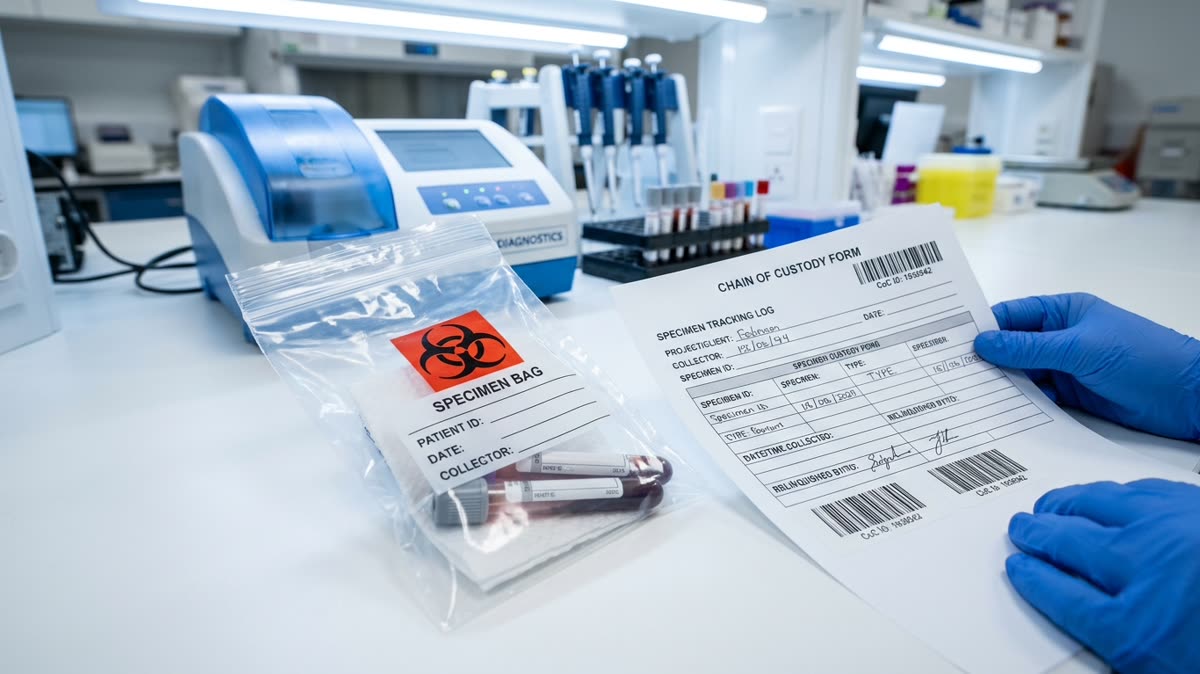
Header image: AI-generated illustration.