
Small-volume blood testing gives you the gold-standard accuracy of blood from a tiny finger-stick sample — no phlebotomist, no venipuncture. Using volumetric absorptive microsampling (VAMS) and definitive LC-MS/MS, LabX delivers a full toxicology and clinical panel that's faster, more accurate, and far harder to cheat than urine or oral-swab collection.
The accuracy of blood, from a finger-stick
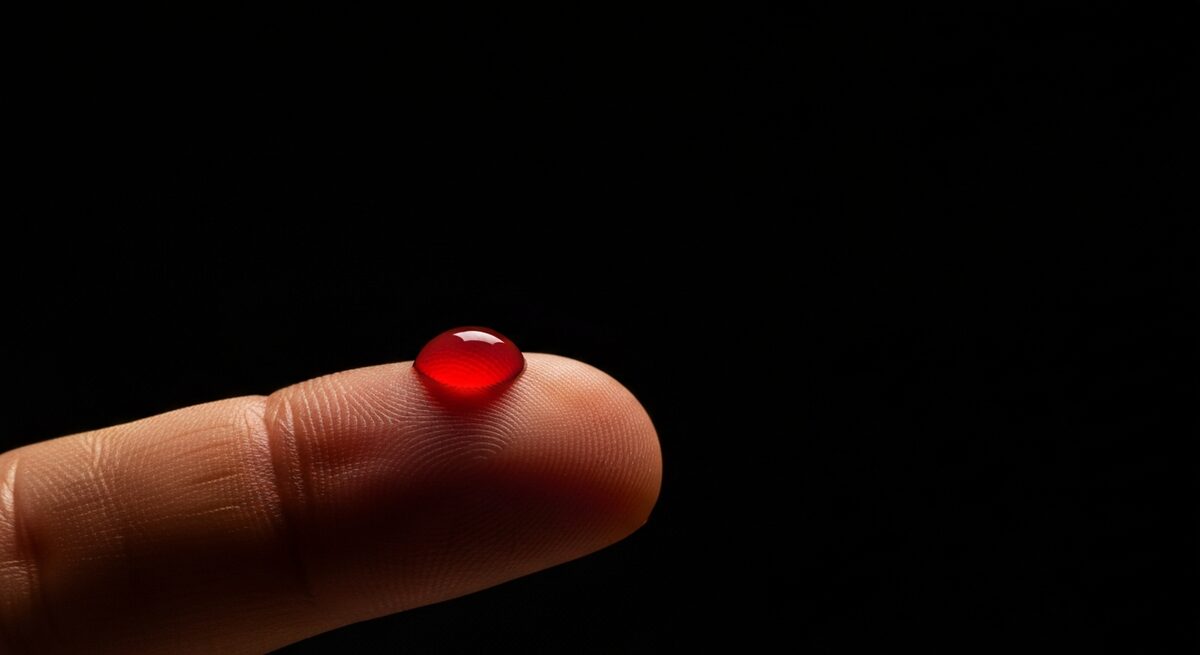
Traditional blood testing meant a full venous draw and a phlebotomist. Small-volume blood testing changes that. Our volumetric absorptive microsampling (VAMS) technology collects a precise, small blood sample from a simple finger-stick — no venipuncture, no phlebotomist, minimally invasive and fast to collect. It's analyzed on validated LC-MS/MS instruments and produces results equivalent to whole blood, and because it's a small, largely dried sample it reduces biohazard exposure and the risk of viral infection in your office. You get the diagnostic power of blood — the reference standard every other specimen type is measured against — without the barriers.
Why blood outperforms urine and oral swabs
Blood captures substances circulating directly in the bloodstream, making it ideal for detecting recent exposure to drugs, toxins and chemicals — with concentrations that are more stable and easier to interpret. Urine tells a murkier story: its concentrations are not related to impairment, and detection varies with a person's metabolism, health and urine acidity. Oral-fluid swabs trade away accuracy too, with narrow detection windows, a limited analyte range, and results easily affected by what someone ate or drank just before collection. For clinical decisions that matter, blood is simply the more reliable answer.
How the specimen types compare
| Factor | Small-Volume Blood (VAMS) | Urine | Oral Swab |
|---|---|---|---|
| Collection | Finger-stick microsample — no phlebotomist or venipuncture | Requires a private bathroom | Simple mouth swab |
| What it measures | Substance circulating in the bloodstream — equivalent to whole blood | Metabolites after the body processes them | Substance in oral fluid |
| Accuracy | Reflects the actual circulating concentration | Concentrations not tied to impairment; varies with metabolism, health & urine acidity | Shorter window & limited range; affected by recent food or drink |
| Detection window | Minutes up to ~72 hours (recent exposure) | Variable | Short (recent use only) |
| Tamper resistance | Hardest to substitute, dilute or adulterate | Easiest to tamper with | Can be affected by rinsing or timing |
| Biohazard risk | Reduced (small, largely dried sample) | Standard | Standard |
Comparison reflects general specimen-type characteristics; individual results depend on the analyte and clinical context.
Far harder to cheat
This is where small-volume blood testing changes the game. Urine and oral-fluid collection are vulnerable to the well-known workarounds — substitution, dilution, adulterant products, and timing the test around a window of clearance. A directly collected blood specimen removes those escape routes: it can't be swapped for someone else's sample, it can't be watered down, and rinsing or timing tricks don't change what's measured in the bloodstream. When the integrity of the result matters, blood is the hardest specimen to defeat.
A full suite from one small sample
From a single small-volume collection, LabX can run a comprehensive suite — definitive toxicology (LC-MS/MS confirmation), medications, and relevant clinical chemistry markers — so you get more answers from less specimen, in one collection.
Fast, definitive results
Small-volume blood specimens run through our definitive LC-MS/MS workflow with fast turnaround and audit-ready documentation, backed by CLIA-certified quality control. Results you can act on — and defend.
Who it's for
Pain management, addiction medicine, behavioral health, and monitoring programs that need accurate, tamper-resistant testing to guide treatment and confirm adherence. Become a client to add small-volume blood testing to your practice.
Talk to a licensed physician
Laboratory results are one part of a clinical picture and are not a diagnosis on their own. Always review results with a licensed physician or the ordering clinician. See our medical disclaimer.