
Privacy and Accuracy: What Parents Should Know About At-Home Lab-Confirmed Testing
When parents consider at-home drug testing, two questions come up above all others: Will this stay private? and Can I actually trust the result? Both are the right questions to ask. Here is a clear, honest look at how privacy and accuracy work with at-home lab-confirmed testing — and what to look for so you get both.
Accuracy: screening is not the same as confirmation
The single most important thing to understand is that at-home tests come in two very different forms.
- Screening tests (instant strips and cups) use immunoassay technology to give a fast result. They are useful and convenient, but they are presumptive: they can produce false positives (for instance, certain medications, supplements, or even some foods can cross-react) and false negatives. A screening result should never be treated as final.
- Laboratory confirmation re-tests the same sample using a definitive method such as GC-MS or LC-MS/MS. These methods identify the exact substance with high specificity, filtering out the cross-reactions that fool instant tests.
This is why "lab-confirmed" is the phrase that matters. A kit that only screens can give you a scare — or false reassurance — that does not hold up. A kit that confirms in a laboratory gives you an answer you can actually build a conversation and a decision on.
Why false positives matter so much at home
In a workplace, a false positive is a serious problem. In a family, it can be even more painful — imagine confronting your teen based on a result that turns out to be wrong. Common over-the-counter medications and prescriptions can trigger presumptive positives on instant screens. Laboratory confirmation is the safeguard that protects your relationship from acting on bad information. If you take only one thing from this article, let it be this: confirm before you conclude.
Privacy: who sees the result?
Privacy is the other half of the equation, and it has a few dimensions:
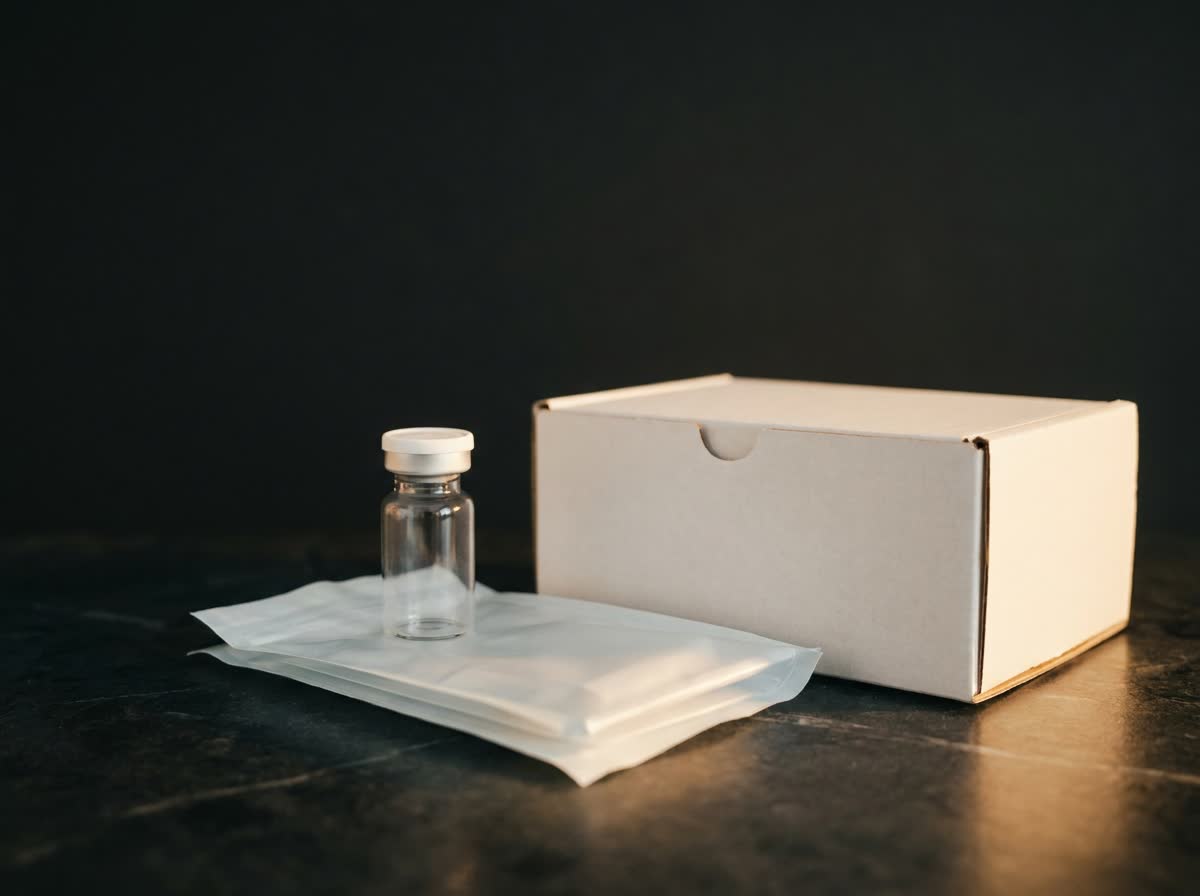
- Discreet delivery: a quality kit ships in plain packaging, so nothing on the box announces what is inside.
- At-home collection: the sample is collected in your own home, on your own schedule — no clinic visit, no waiting room, no one else present.
- Secure results: confirmed results should be delivered through a private, password-protected account, not a plain text or unencrypted email that others might see.
- Data handling: a trustworthy provider limits who can access results and protects your personal and health information rather than sharing or selling it.
Testing at home keeps a sensitive family matter inside the family, which is exactly where many parents want it to stay.
Chain of custody: quiet but important
For results to be meaningful, the sample has to be handled properly from collection to lab. A documented chain of custody — sealing, labeling, and tracking the sample — ensures the result actually belongs to the sample you sent and has not been compromised in transit. Good lab-confirmed kits build this in so you do not have to think about it.
What to look for in a kit
Put privacy and accuracy together and the checklist is simple. Choose a kit that offers genuine laboratory confirmation, ships discreetly, maintains a documented chain of custody, and delivers results through a secure private account. If any of those are missing, you are trading away either trust or discretion.
LabX Diagnostic Systems designed its at-home kits to deliver both. Collection happens privately at home, samples are confirmed in a laboratory, and results are available only to you through a secure account. You can see how the process works and order a discreet, lab-confirmed kit whenever you are ready.
The takeaway
At-home testing can absolutely be both private and accurate — but only if you choose a kit that confirms results in a lab and protects your data. Screening alone risks acting on a false result; lab confirmation protects your peace of mind and your relationship. Choose accuracy and privacy together: order a lab-confirmed at-home kit from LabX.
Talk to a licensed physician. Information on this page is general education, not medical advice or a diagnosis. Review any test result and any symptoms with a licensed physician, and seek emergency care if needed. See our medical disclaimer.