What Is the Law on Random Drug Testing? (2026 Employer Guide)
If you are an employer, HR manager, or safety director, you know that keeping your workplace safe is a top priority. But what is the law on random drug testing? The direct answer is that the law depends entirely on whether your employees are regulated by the federal government or by private state employment laws. For federal safety-sensitive roles, the Department of Transportation (DOT) legally mandates random testing. For private, non-DOT employers, state laws dictate whether random testing is completely legal, highly restricted, or entirely prohibited.
Navigating these rules in 2026 requires understanding the stark divide between federal mandates and state-level employee privacy protections. A misstep can lead to federal fines, costly discrimination lawsuits, or the loss of your workers' compensation premium discounts. This guide breaks down the current legal landscape so you can build a compliant program.
The Big Divide: Federal Mandates vs. State Laws
When building or auditing a drug testing program, you must first classify your workforce. The rules you must follow will fall into one of two distinct categories:
- Federal (DOT) Employees: If your employees perform safety-sensitive duties—such as driving commercial motor vehicles, flying aircraft, operating railways, or working on pipelines—they are governed by federal law. The DOT dictates exactly how, when, and how often you must randomly test them. State laws do not override these federal mandates.
- Private (Non-DOT) Employees: If your employees do not fall under federal jurisdiction, your testing program is governed by the laws of the state (and sometimes the city) where the employee works. There is no overarching federal law that prohibits private employers from drug testing, but state laws vary wildly from coast to coast.
Many companies have a "mixed" workforce. For example, a logistics company might have DOT-regulated truck drivers and non-DOT warehouse workers. In these cases, employers must maintain two entirely separate random testing pools with separate policies.
Federal Law: DOT Random Testing Mandates for 2026
For safety-sensitive transportation workers, random drug testing is not optional—it is a strict federal requirement under 49 CFR Part 40. Employers must place all covered employees into a scientifically valid random testing pool.
Each year, the DOT agencies publish their minimum random testing rates. Employers must ensure they test the required percentage of their average workforce throughout the calendar year. The selections must be truly random, unannounced, and spread reasonably throughout all four quarters of the year. Every employee in the pool must have an equal chance of being selected during each draw, meaning an employee could legally be selected multiple times in a single year.
2026 DOT Random Testing Rates
The Office of Drug & Alcohol Policy & Compliance (ODAPC) sets the rates for each operating agency. For 2026, the key annual random testing rates are:
| DOT Agency | 2026 Random Drug Testing Rate | 2026 Random Alcohol Testing Rate |
|---|---|---|
| FMCSA (Commercial Motor Carriers) | 50% | 10% |
| FAA (Aviation) | 25% | 10% |
| FRA (Railroad - Covered Service) | 25% | 10% |
| FTA (Transit) | 50% | 10% |
Failing to meet these federal quotas can result in severe fines, loss of operating authority, and immense liability in the event of an accident. Employers are required to keep meticulous records of their random draws and submit annual reports to their respective DOT agency.
State Laws: The Complex Landscape for Private Employers
If your employees are not federally regulated, you must turn to state law. Because the Substance Abuse and Mental Health Services Administration (SAMHSA) only provides guidelines for federal agencies, private employers are left to navigate a patchwork of 50 different state statutes.
State laws generally fall into three categories regarding random testing:
1. Employer-Friendly States (Voluntary Programs)
In states like Florida and Texas, employers have broad discretion to conduct random drug testing. Florida, for example, operates a voluntary Drug-Free Workplace Program. While Florida law does not require private employers to test, those who voluntarily adopt a compliant program—which can include random testing—earn mandatory discounts on their workers' compensation insurance premiums. They also gain stronger legal defenses against unemployment claims if an employee is terminated for a positive result.
2. Restrictive States (Safety-Sensitive Only)
In states with strong privacy protections, random testing of existing employees is heavily restricted. Under the California Constitution, for example, random drug testing is generally considered an invasion of privacy. California courts have consistently ruled that random testing is only permissible for a very narrow set of highly safety-sensitive roles. For standard office workers, retail employees, or general laborers in California, random testing is effectively illegal, and employers must rely on reasonable suspicion testing instead.
3. Highly Regulated States
Some states have standalone statutes that explicitly prohibit random testing for non-DOT employees. Rhode Island is famously strict: state law generally prohibits employers from requiring current employees to submit to drug testing unless there are specific, documented reasonable grounds to believe the employee is impaired at work. In Rhode Island, random testing of non-DOT employees is largely unavailable, and the state even mandates that employers offer rehabilitation rather than immediate termination for a first positive test.
The Impact of Legalized Marijuana on Random Testing
Marijuana legalization has created the most significant compliance headache for HR managers in recent years. While marijuana remains a Schedule I illegal substance under federal law, the majority of states now permit its medical or recreational use.
If you have DOT-regulated employees, federal law trumps state law. You must continue to test for marijuana, and a positive test requires immediate removal from safety-sensitive duties, regardless of state legalization or the employee's possession of a medical marijuana card.
However, for private employees, state laws are rapidly changing how employers can respond to positive marijuana tests. For example, California's AB 2188 (which took effect in 2024) makes it unlawful for most employers to discriminate against employees based on off-duty cannabis use. It restricts employers from using standard urine or hair tests that only detect non-psychoactive cannabis metabolites. This means employers in California must shift their policies to measure active impairment rather than past use. Multi-state employers must be incredibly careful to adjust their drug testing panels based on the state where the employee resides and works.
Best Practices for a Compliant Program
Whether you are managing a federal DOT pool or navigating state laws for private employees, a compliant random testing program requires strict procedural discipline. Here is how to protect your business and your employees:
- Draft a Clear, Written Policy: Your drug testing policy is your legal shield. It must explicitly state who is subject to testing, under what circumstances (random, post-accident, reasonable suspicion), what substances are being tested for, and the exact consequences of a positive result or a refusal to test.
- Use a Third-Party Administrator (TPA): Never pull names out of a hat or select employees manually. Use a scientific, computer-generated random selection process managed by a TPA or consortium to ensure the draw is truly random, unbiased, and defensible in court.
- Rely on CLIA-Certified Laboratories: Using a certified laboratory ensures your results are scientifically accurate and legally sound. LabX Diagnostic Systems offers bulk drug test kits for employers that deliver CLIA-certified results with optional LC-MS/MS confirmation, providing the exact precision needed to defend your HR decisions.
- Utilize a Medical Review Officer (MRO): Always use a licensed physician acting as an MRO to review non-negative results. The MRO will interview the employee privately to determine if there is a legitimate medical explanation (like a valid prescription) for the positive result before reporting it to the employer as a failure.
For individuals who want to understand their own baseline before a pre-employment screening, or for families seeking privacy, LabX Diagnostic Systems also offers a confidential at-home 12-panel drug test. While workplace policies vary, knowing what a certified lab detects can provide peace of mind.
Consult Legal Counsel Before Testing
Because the law on random drug testing shifts rapidly—especially regarding state cannabis protections and privacy rights—generic policy templates downloaded from the internet are a major liability. Always have your drug-free workplace policy reviewed by an employment attorney who specializes in the specific states where your employees actually work. A legally sound program not only protects your company from litigation but also ensures a genuinely safe, fair, and productive environment for your entire team.
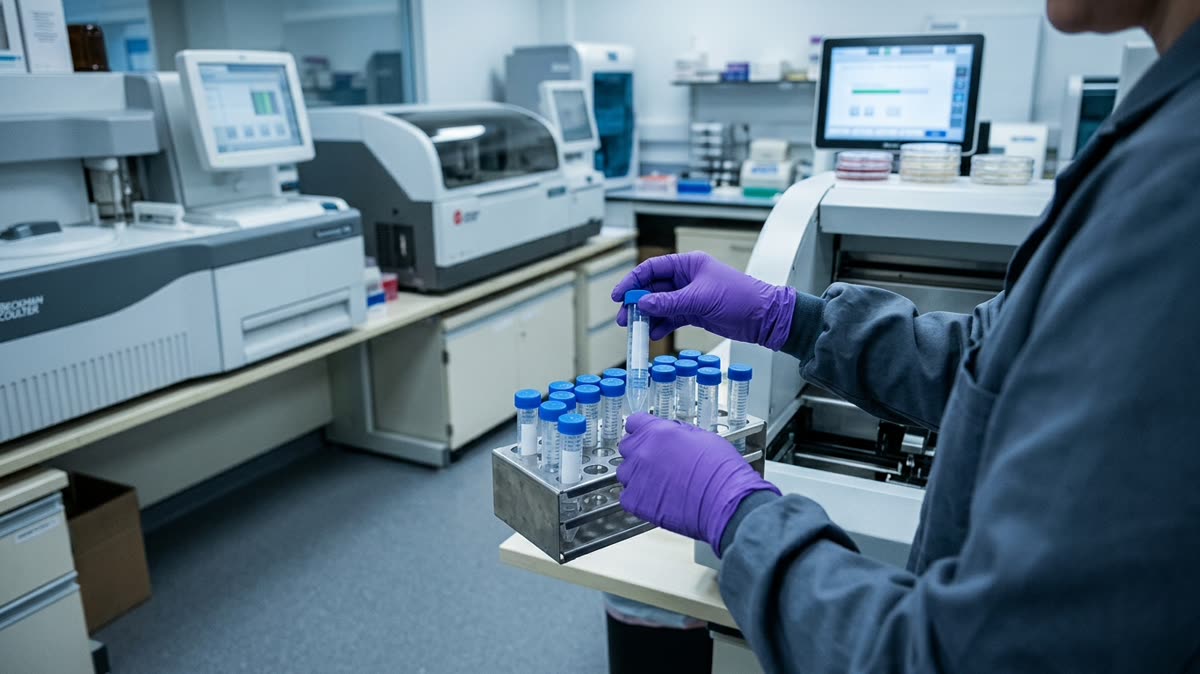
Header image: AI-generated illustration.